

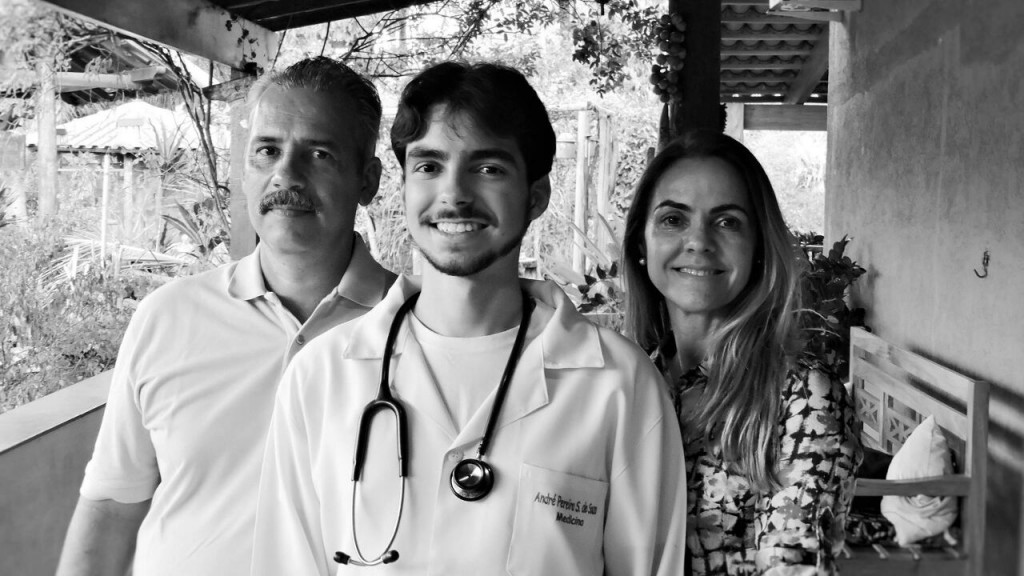
“Since I was a child, study medicine has always been my dream”, said André Pereira, 22, a medicine student at Iguaçu University (UNIG), Itaperuna – Rio de Janeiro. André was born at Governador Valadares, Minas Gerais, where his parents live and from where he left to go to university, he splits his time among studies, family, girlfriend, and friends: “I have a routine that requires a lot of me and I try to dedicate myself as much as I can to the career that I chose. When I’m not studying, which is rare, I like to go to cinema, run, and play basketball”.
Besides university, André needs to keep a constant care about his eating and avoid the consumption of animal and veggie protein, because he was diagnosed with phenylketonuria, a genetic disease in which the organism is not able to metabolize the phenylalanine, an amino acid presents in proteins, if it is accumulated in body, it can cause severe damage to brain. “Living with this food restriction is not so simple, but if there is support from relatives and people who are around you, it gets easier”, said the student. André was diagnosed right after he was born, on March 1994, by newborn screening, known as Neonatal Heel Prick Test.
Diagnostic and overcoming
André was one of the first children diagnosed by Newborn Screening Program of Minas Gerais (PTN-MG). This program was created by Minas Gerais State Health Department, at the end of 1993, in order to offer the Neonatal Heel Prick Test for free to every newborn of state. The Newborn Screening Program of Minas Gerais (PTN-MG) is enabled by the Center for Newborn Screening and Genetics Diagnostic (Nupad). The program provides the diagnosis for severe congenital diseases, like phenylketonuria, that, generally, do not present any symptoms during neonatal period, and may cause irreversible consequences if they are not discovery early. André’s mother, Rosânia de Souza, remembers that she knew the Program right after her son was born: “In 1992, when my first son, Mateus, was born, the Neonatal Heel Prick Test was paid and made at regular laboratories. When André was born, the test could be made by Minas Gerais State Health Department. Thus, I became interested in the Program”.
According to Rosânia, right after the diagnosis, the first tests and medical appointments were made. Initially, part of the treatment was made at São Paulo, and some months later, it was shifted permanently to Belo Horizonte. “We came up to medical appointments, blood collection… It was a long wait, but we were in contact with other mothers, thus we exchanged experiences. The treatment has been made and we saw the evolution of the Program”, said the lawyer. She remembers that, at the beginning, it was hard to sit at the table and realize that her son could not eat anything: “It was sad, but quickly we remembered the diagnosis, which was made early and each member of the family get involved.”
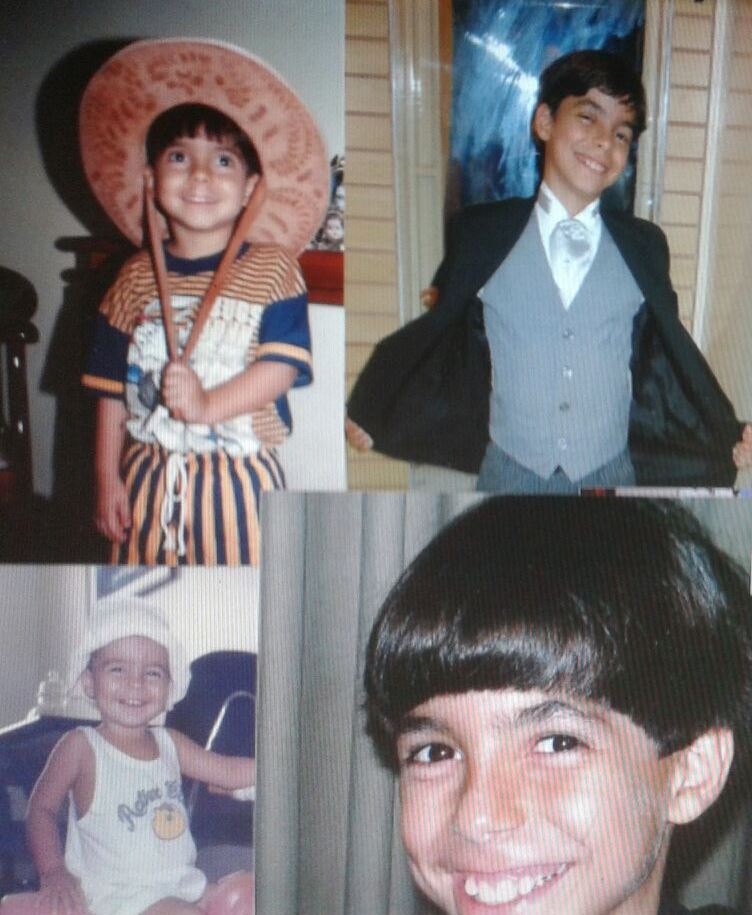
André also emphasizes that maintain the treatment since the beginning was very important. This helped him to adapt to permitted food on daily basis. “This do not meaning that I do not find difficulties as well, like the desire to eat something that I can’t at a specific place and do not find many options. But, thank God and the fast diagnosis, my taste was targeted to a right diet that would make me feel good”, said André.
Nowadays, the student keeps the care about what he eats and makes blood tests every month in order to measure the level of phenylalanine in his body, besides medical appointments made at Belo Horizonte, every year: “I know that this control is essential to keep me healthy”.
Gratitude and future
André’s mother remembers with fondness the experiences that the family lived during these 22 years, among André’s birth, the phenylketonuria diagnosis and the medical supervision. “I knew about the Neonatal Heel Prick Test, and despite challenges, the journey did not stop. We were welcomed and supported by competent and dedicated professionals, who did not desist from us, our sons and our impatience. The dream of creating this Program emerged in the right person, who knew that this Program would go ahead, growing, and raising people’s awareness. I’m so grateful for all”, said Rosânia.
When the young student thinks about the future, he who does not decide which medical specialization he is going to do, makes plans: André intends, after finish Medicine course, start his residency and then a master outside Brazil. “This achievement means the realization of a dream and the confirmation of my ability and dedication”, André said.
Newborn Screening Program of Minas Gerais (PTN – MG)
Nowadays, Minas Gerais Newborn Screening Program (PTN-MG) sums approximately 5,5 millions of children screened in every 853 cities of state, besides more than 5 thousand children diagnosed and in medical supervision.
Beyond phenylketonuria, Newborn Screening Program of Minas Gerais (PTN-MG) makes early diagnosis of 5 other diseases: congenital hypothyroidism, sickle cell disease, cystic fibrosis, congenital adrenal hyperplasia, and biotinidase deficiency.