


Considered as the user’s entry door to the Unified Health System (SUS), UBS, as health basic units are known, have an essential role in guaranteeing access to good quality service for the population. With an average of 17 thousand users, UBS Vila Militar, located in Bethânia neighbourhood in Ipatinga (MG), has performed this role since 2005. And the good numbers for neonatal screening reveal a lot of its work.
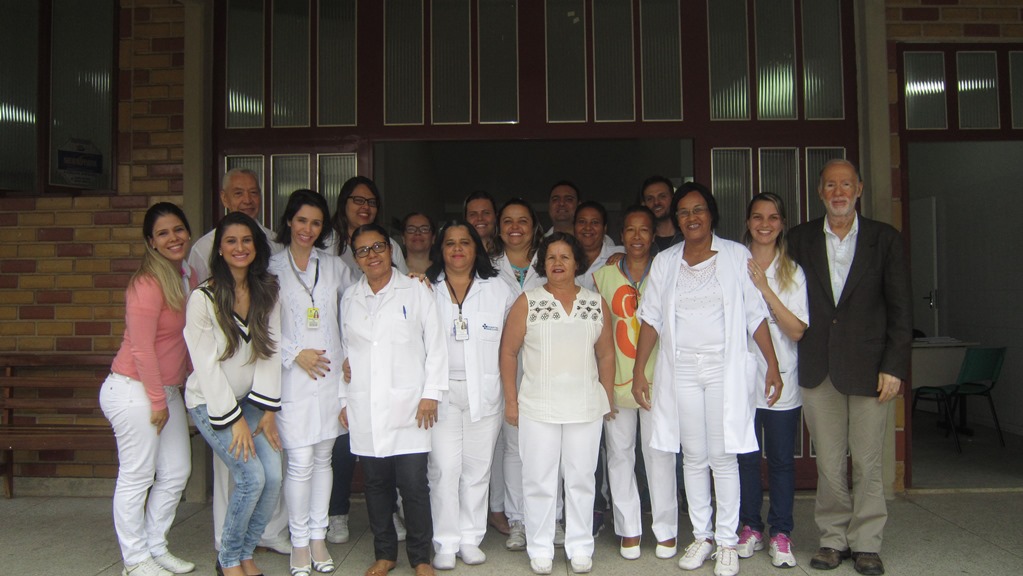
This unit is composed by four PSF teams (Family Health Program), which one responsible to attend six micro areas and about 4 thousand users. Among the 60 professionals, there are medical doctors, nurses, nursing technicians, community health workers, auxiliaries, psychologists, social assistances, dentists, besides a NASF team (Family Health Support Center) composed by nutritionists, physiotherapists, speech therapists, physical educators and psychologists, which acts in a comprehensive way with the other.
Neonatal Screening
UBS Vila Militar collects, on average, 19 neonatal screening tests (heel prick test) per month.
According to Center for Newborn Screening and Genetics Diagnosis (Nupad), executor of Minas Gerais Newborn Screening Program (PTN – MG) under State Health Department of Minas Gerais (SES – MG) management, this UBS keeps a high quality in the samples sent for laboratory analysis: in the last 12 months, no sample was considered inadequate.
Besides, in the last six months, the average of collections followed the period recommended, between the 3rd and 5th day of life, and were sent to Nupad about one day after the sampling. This tends to make the screening process, the results release and the beginning of the newborn’s treatment faster, if there is any disease diagnosed.
“It is teamwork”, says the Unit’s head nurse, Rosane Campos referring to the incators. According to her, the prenatal follow-up in the municipality’s health network is very good, with the UBS team monitoring pregnant women and with their participation in educational groups: “A pediatrician participates in these groups, so she/he can talk about the newborn’s care and the importance of taking the test the earliest possible, between the 3rd and 5th day of life, and of coming to the Unit. In the maternity hospital they also give this orientation.”
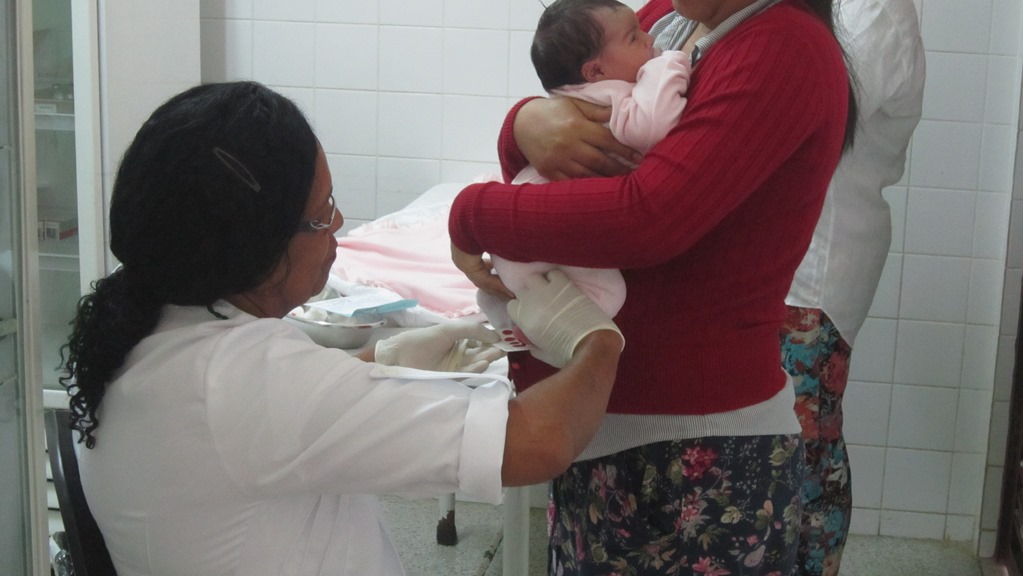
Concerning the samples’ quality, Rosane highlights the merit of Maria das Graças Gomes, the professional responsible for collection, besides the service organization. “As she is really good and has been here for a long time, since 2005, we try to get all technicians to be trained by her to learn and keep the quality. So, it happens more fluidly”, she says. “There is no secret”, assures Graça, as the nurse technician is known. “We have to explain why the heel prick test is taken, which diseases are diagnosed. The parents pay attention and even make questions, and then I say that it is simple, that the treatment is very important. Sometimes, the babies don’t even cry. I love what I do and I know it is important for the children”, she says. “She does what she likes; families look for her”, says Ivani Santos, a Unit user.
The head nurse also explains that the responsibility of vaccination room’s professionals, besides vaccination and regular blood collection of pregnant women for congenital toxoplasmosis, to perform all the other neonatal screening procedures, such recording the collection, drying and sending samples, printing and handing results to the families. In case that there is suspicious result or a change in it, after NUPAD’s notification to the Unit, the team makes contact with the family by phone. “If the diagnosis is certain, the nurse visits the family to give this information”, adds Rosane.
Families’ follow-up
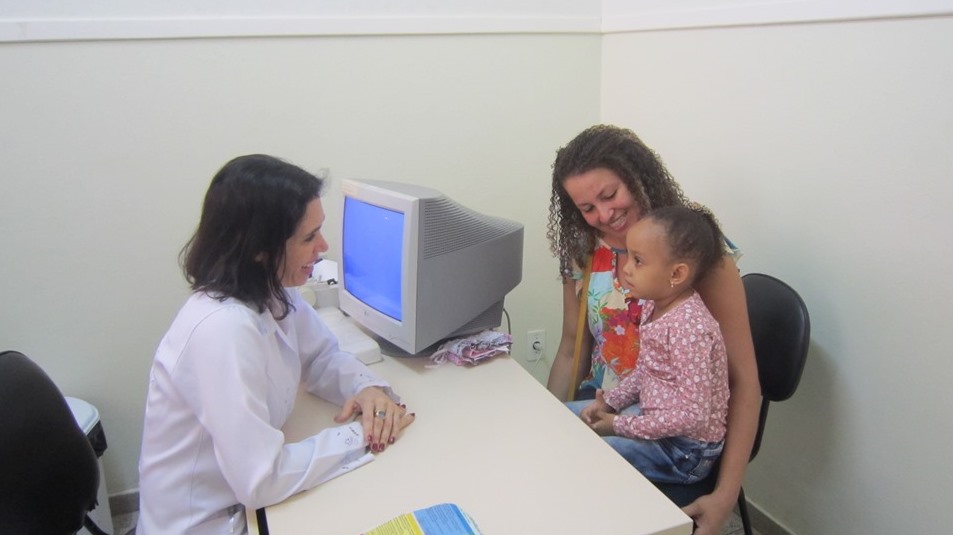
Little Maria Clara, 4 years old, attended by UBS Vila Militar, is one of the children followed by PTN-MG. She was diagnosed with sickle cell disease in the neonatal screening test, and now, besides regular consultations in the Unit, she goes to Hemominas Foundation, in Belo Horizonte, each six months for the disease’s treatment.
Claudinéia Souza, Maria Clara’s mother, tells us that when she learned the diagnosis result she cried a lot, because she did not know the disease and what could happen to her daughter: “I had never heard about it. In her first month I went to Hemominas, and there I got calm”. With few hospitalizations in her history, Maria Clara leads a normal life by her parents and since she was three she has been going to school. “We are surprised with her in school. She is doing very well; she can write her name without copying it. Before she didn’t like to talk, she hid. It was the best thing”, emphasizes Claudinéia.
In addition to Maria Clara, other two children diagnosed by the Minas Gerais Newborn Screening Program are attended by the UBS Vila Militar: one also has the sickle cell disease and the other has congenital adrenal hyperplasia. “We have no difficulties contacting these families; the follow-ups have been very easy”, says Rosane.
The nurse tells us that Nupad controls schedule and consultations attendance in the outpatient clinics of Belo Horizonte and that the other follow-ups, with nurse, doctor or educational groups, continue in the Unit. “The first year of the baby we have childcare consultations almost every month, so the contact is closer with every child. When the baby has some disease defined, then we have the support of the network’s pediatrician and also of the Unit’s reference pediatrician”, she explains.
Team’s training
With most of the team members being civil servants, Rosane says that the highest staff turnover is among doctors and technicians. “Nevertheless, currently, one of the doctors has been here for four years and the nurses, all of them civil servants, have been here for eight to ten years”, she exemplifies.
According to Rosane, all the nurses received training for neonatal and prenatal screening by Nupad. She was trained in 2012, in Belo Horizonte, and the others in 2015, in Nupad’s training offered in Coronel Fabriciano, at the Health Regional Management. For the nurse Leonardo Campos, who has been part of the Unit’s team since 2007, to get to know better the diseases identified through neonatal screening tests was his main interest. “After we multiply it for the team, technicians and nurses. Everyone should participate”, he says.
Ipatinga
According to Ipatinga’s Municipal Department of Health – Technical Reference of Children and Adolescent Health, the municipality has 21 UBSs, with 17 registered in PTN-MG. Besides, the reference maternity hospital, in the Hospital Márcio Cunha, collects samples for neonatal screening in hospitalized newborns from Ipatinga and from other regions.
Ipatinga has 241,720 thousand inhabitants and it is part of Coronel Fabriciano’s Reginal Health Superintendence (SES-MG data).